Table Of Content
- UserWay’s Online Accessibility Legal Support Program
- What Tech Job is Right for Me? A Comprehensive Guide to Navigating Your Career Path
- Principle 7: Appropriate Size and Space for Approach and Use Principles of universal design
- Tolerance for Errors Guidelines
- Building Connections: The Integral Role of Architecture in Human Existence and Community
- Reasons Why Accessible Design Is Good for All

My husband Mark Leder and I have been applying its principles as we build our new home, the Universal Design Living Library () in Columbus, Ohio, which I’ve written about in previous columns. TED is a non-profit organization, which is dedicated to spreading ideas via short power talks. The talks are usually 18 minutes or less and are often uploaded as videos on their websites. In order to reach and help as many users as possible, TED's website provides subtitles and transcriptions for their online videos. That’s a huge service for the hearing-impaired user, and it’s a great service for everybody else who prefers to read instead of viewing and hearing videos. In turn, it’s also good for TED as they reach more users and increase their popularity.
UserWay’s Online Accessibility Legal Support Program
You can design superb interactive experiences by adding appropriate keyboard shortcuts. They will improve the navigation and make websites easier to use for all users. People with hearing problems or language barriers have difficulty consuming information from videos.
What Tech Job is Right for Me? A Comprehensive Guide to Navigating Your Career Path
Important information should be presented in multiple ways—say through both pictures and words—and designs should be compatible with devices that are used by people with physical limitations. In an ideal world, the web and other digital tools would be equally available to everyone. Projects for digital products tend to focus on primary and secondary users instead of all users.
How the 7 principles of Kwanzaa intersect with Peace Corps service - Peace Corps
How the 7 principles of Kwanzaa intersect with Peace Corps service.
Posted: Sun, 17 Dec 2023 08:00:00 GMT [source]
Principle 7: Appropriate Size and Space for Approach and Use Principles of universal design
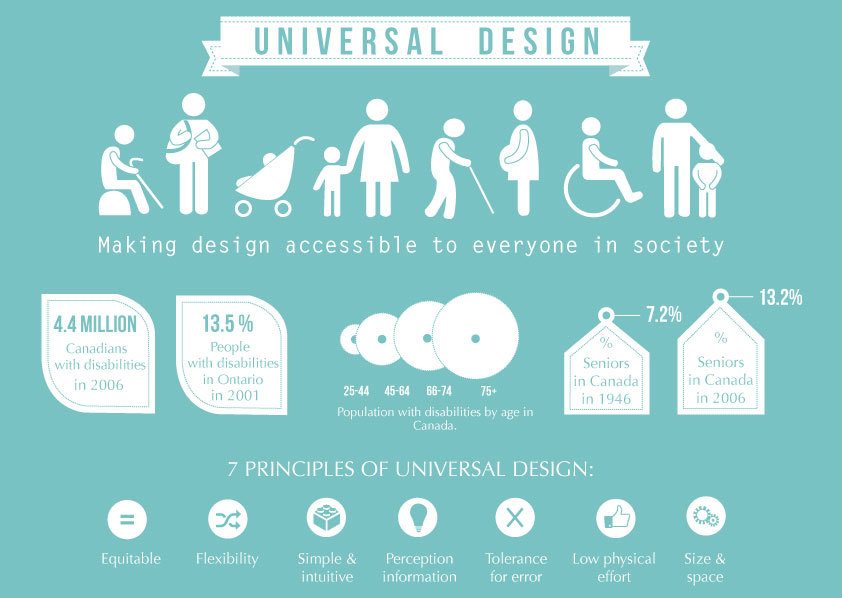
A focus on disability inclusion in the workplace is a strategic imperative from a moral and legal standpoint. AbilityNet can support you in building a workplace that is inclusive by design and uses technology to enable all employees to perform at their best. If we want everyone to participate in public life, we must design and build an inclusive public realm that is accessible to all. Public life can’t just be available to the abled, young, or healthy. These shortcuts reduce mouse usage and minimize repetitive actions.© Asana, LLC., Fair Use. You will be taught by Frank Spillers, CEO of the award-winning UX firm Experience Dynamics, and will be able to leverage his experience from two decades of working with accessibility.
Tolerance for Errors Guidelines
This benefits visually impaired users who rely on screen readers, and it also aids search engine optimization. The UDL Guidelines are a tool used in the implementation of Universal Design for Learning, a framework to improve and optimize teaching and learning for all people based on scientific insights into how humans learn. Learn more about the Universal Design for Learning framework from CAST. The UDL Guidelines can be used by educators, curriculum developers, researchers, parents, and anyone else who wants to implement the UDL framework in a learning environment.
Universal Design as a Framework for Diversity, Equity, and Inclusion Initiatives in Higher Education DO-IT - UW Homepage
Universal Design as a Framework for Diversity, Equity, and Inclusion Initiatives in Higher Education DO-IT.
Posted: Sun, 09 Jan 2022 07:09:21 GMT [source]
Provide multiple means of
So, the next time you design for mobile, make sure your touch target areas take the human physical factors into consideration. Equitable use is the first principle because it is the driver for accessibility. The principle promotes you to think about users with different abilities. When you use this principle, you must consider all users, instead of only the target users. When you design for all users, you will also improve the experience for your target users and increase the brand value of your company. This set was generated by the Commission for Architecture and the Built Environment (CABE).
Building Connections: The Integral Role of Architecture in Human Existence and Community
The NDA assists in the co-ordination of disability policy, and also promotes Universal Design through the Centre for Excellence in Universal Design. Appropriate size and space is provided for approach, reach, manipulation, and use regardless of user's body size, posture, or mobility. Universal Design is implemented in digital spaces through strategies like screen reader compatibility, closed captioning, keyboard navigation, and responsive design, enhancing usability for all users. This principle demonstrates the necessity for designs to offer suitable dimensions and spatial allowances, i.e. building restroom stalls that accommodate wheelchairs. This principle concerns the reduction of risks and mitigating the negative effects of inadvertent or unintended actions in a design.
In that, no matter how it is used, there are minimal errors and minimal consequences for those errors? This is vital for those with differing abilities; they may make mistakes compared to other users but they should not be unduly inconvenience for those mistakes either. The principle of “Design for All” is one that begins with the Seven Principles of Universal Design. These were founded at North Carolina State University back in 1997 by a team of design specialists across multiple disciplines which was headed by Ronald Mace. The Seven Principles help designers evaluate the effectiveness of their designs to be used by as many people as possible.
The importance of universal course design cannot be overstated, as it represents a foundational principle for ensuring equitable access and inclusive learning environments. Instructors can proactively address diverse learning needs and foster an environment where every student can thrive by incorporating flexibility, simplicity, and multiple means of representation, expression, and engagement. Moreover, universal design not only benefits students with disabilities but also enhances the overall learning experience for all learners, promoting engagement, participation, and academic success.
You can drive positive change and create a more inclusive design culture with universal design. They can ensure that your designs meet accessibility standards and guidelines. They can also provide valuable insights and guidance throughout the design process. So, continuously gather feedback, evaluate your design’s effectiveness, and make improvements based on user insights. That way, you can create more inclusive and user-friendly experiences over time. The belief that accessibility and usability go hand in hand is the foundation of universal design.
(For example, do they not speak English as a first language?) Does your design account for potential hazards and adverse conditions, which some users may find themselves in? You can then use this feedback to refine and improve things until the design is easy to use for everyone. Usability testing (UT) helps you gather quantitative and qualitative data from representative users - including those with disabilities.
Permission is granted to copy these materials for educational, noncommercial purposes provided the source is acknowledged. Electronic forms can be completed using a wide range of devices, including assistive technologies. Saves your settings and preferences, like your location, for a more personalized experience. Unfortunately, world-class educational materials such as this page are normally hidden behind paywalls or in expensive textbooks. The Principles established a valuable language for explaining the characteristics of Universal Design. They are in common use around the world, sometimes with slight modifications, primarily one or two principles grouped together.
Universal design is an approach for designers to make products and services accessible and usable for the largest possible audience without the need for adaptation or specialized design. Designers use its seven principles to create a solution that can cater to as many users as possible. This is the seventh universal design principle and states that a design should have proper space and size for a user’s body size, posture, or mobility to approach, reach, use or manipulate. This principle encourages the provision of a clear line of sight and comfortable hand reach for either a standing or a seated user to view important elements or reach all components. It also seeks to accommodate different hand and grip sizes and create suitable space for personal assistance or assistive device use.
When you incorporate this principle into your design, start with your users. You can figure out how best to present information by considering users with disabilities, such as those with vision or hearing impairments. A static and inflexible design will never be able to accommodate all users. The Flexibility in Use principle encourages flexible, adaptable and/or customizable design.
These are just a few examples of how Universal Design principles create a more inclusive and accessible digital world. Let’s take a closer look at how inclusive design principles translate to websites, apps and digital assets. The Ronald L. Mace Universal Design Institute is a non-profit organization based in North Carolina dedicated to promoting the concept and practice of accessible and universal design. The Institute’s work manifests the belief that all new environments and products, to the greatest extent possible, should and can be usable by everyone regardless of age, ability, or circumstance. Guided by the vision of founder Ronald L. Mace, FAIA, the Center developed a successful program of assembling and disseminating existing information and created new, landmark materials on accessible housing. The Center for Inclusive Design and Environmental Access (IDeA Center) focuses on research, development, education, dissemination and design projects related to universal design.




No comments:
Post a Comment